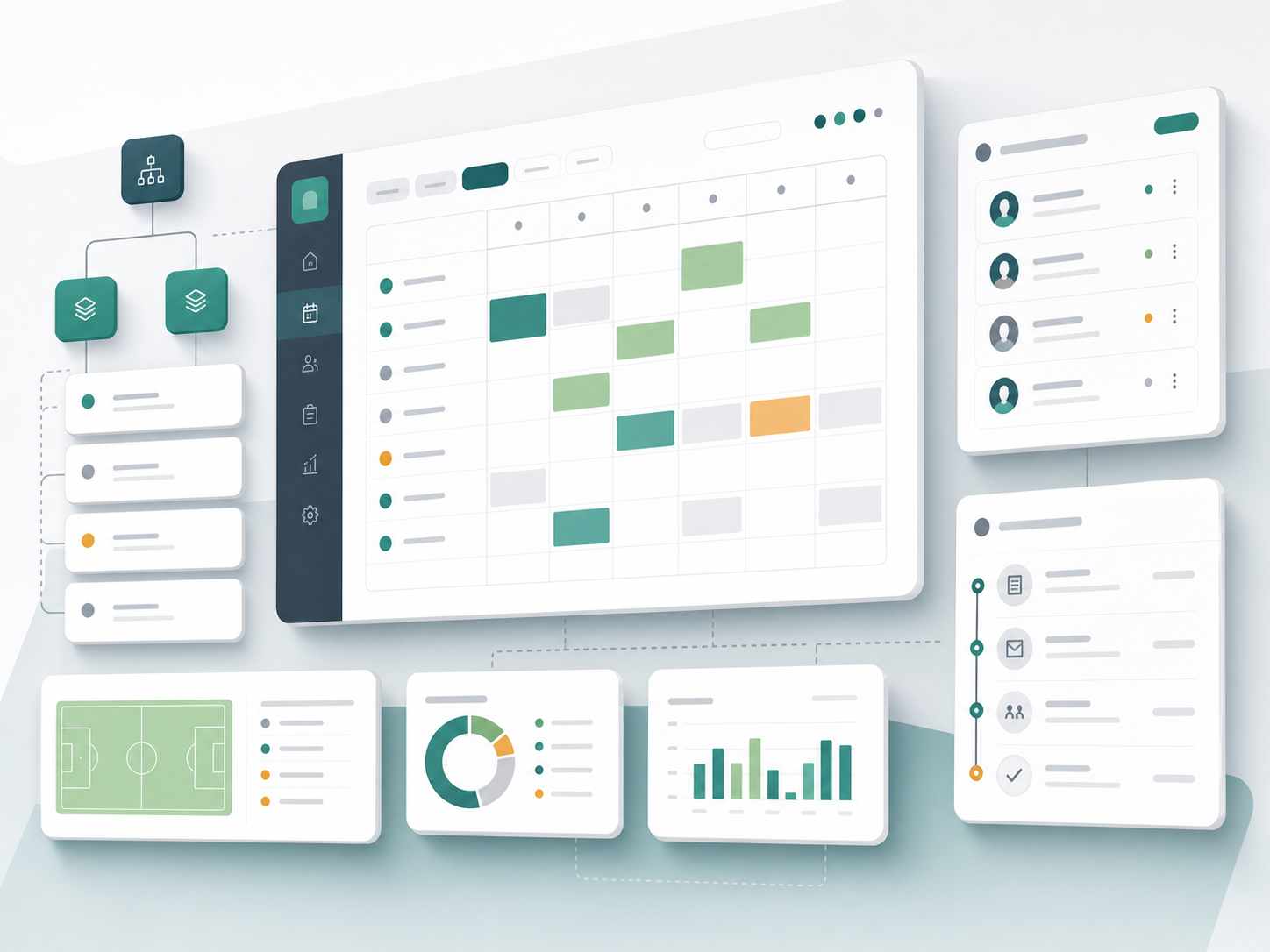
LeagueSlate is an admin-first league operations product direction for organizers who need structure, rosters, seasons, divisions, users, games, and approvals to stay understandable as the league grows.
Problem Shape
League management can become scattered when setup, roster changes, season structure, division rules, scheduling foundations, and approval work live in too many places. The product direction centers on giving administrators a clearer path through repeated league operations before expanding into broader roles or public-facing features.
Product Direction
- Keep the V1 scope admin-first.
- Build the Angular admin web experience around league setup and repeat operations.
- Keep the ASP.NET Core API as the source of truth for permissions, validation, admin workflows, and business rules.
- Use Supabase-backed identity and data foundations while keeping role enforcement and object-level authorization in the API.
- Delay coach, parent, mobile, reports, payments, chat, public explore, and advanced stats until the admin foundation is stable.
Engineering Notes
The interesting work is in the product boundary between workflow, data, and security. The documented foundation separates interface convenience from authority: Angular can guide the admin experience, but backend validation and authorization remain the safer boundary for league operations.
The case-study signal is not a broad feature list. It is the discipline of keeping V1 focused on the admin job: create and manage league structure, teams, users, games, approvals, seasons, divisions, and scheduling groundwork before expanding the audience.
Evidence Signals
- The documented stack direction uses Angular for the admin frontend and ASP.NET Core for the API.
- The backend is explicitly framed as the owner of permissions, validation, admin workflows, and future business logic.
- Supabase Auth provides identity direction, while JWT validation, role enforcement, and object-level authorization belong in the API.
- The V1 rule asks whether each feature helps an admin create and manage the league before it belongs in scope.
Public Boundary
This page stays at the product and engineering level. Private app links, user data, infrastructure details, credentials, logs, private environment values, and live deployment details stay out of view.