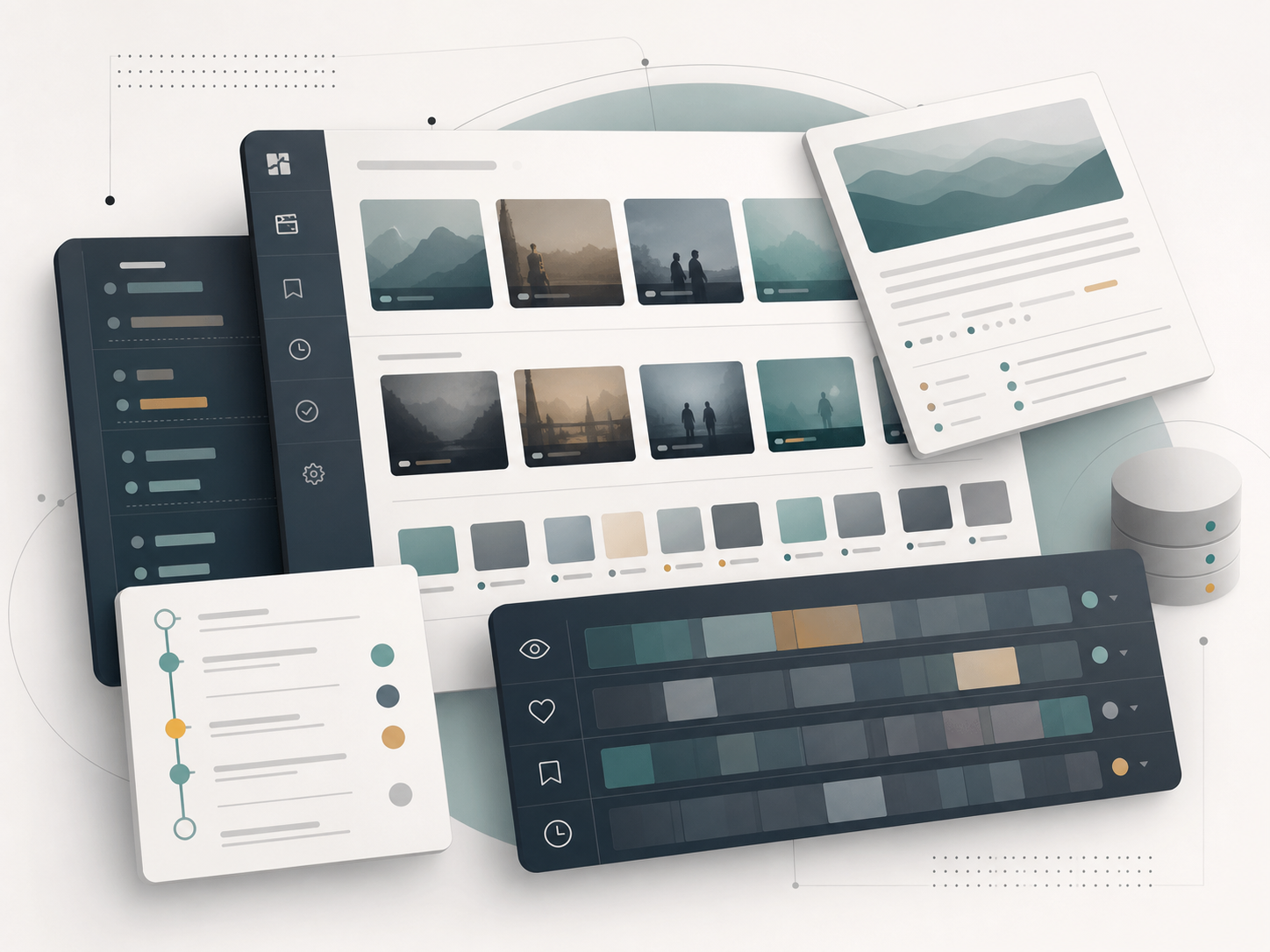
SlateWatch is a self-hosted movie and TV tracking foundation focused on watchlists, metadata search, media-stack sync direction, playback events, and durable watched history.
Problem Shape
Personal media notes can fragment across watch history, watchlists, recommendations, discovery lists, and library tools. The product direction is a tracker that helps keep those decisions organized without becoming a streaming or content distribution surface.
Product Direction
- Organize movie and TV metadata around personal intent.
- Keep discovery, saved items, and watch history distinct.
- Use self-hosted integrations as backend-owned product behavior, not public portfolio links.
- Preserve watched history even when external library state changes.
- Avoid presenting the project as a streaming service.
- Keep the self-hosted-first privacy boundary clear.
Engineering Notes
The interesting work is information architecture and integration boundaries: how to represent media, watchlists, intent, library inventory, sync status, playback events, and watched history in a way that remains simple enough for repeated personal use.
The documented direction includes a .NET API, Angular frontend, PostgreSQL records, Redis/background-job direction, metadata search, movie and show watchlist flows, notifications, and playback-event handling. The public case study can describe those product boundaries without exposing private library contents, server details, credentials, or live app links.
Evidence Signals
- The documented V1 goals include metadata search, personal watchlists, sync validation, notifications, playback events, and preserved watched history.
- Movie and show flows are separated where their sync behavior differs.
- The project is explicitly not a streaming platform or content distribution surface.
- Docker Compose and self-hosted deployment notes exist, but private deployment values stay out of the portfolio.
Public Boundary
This page focuses on tracking, discovery, and organization. Private app links, infrastructure details, media server details, credentials, logs, streaming links, content distribution, private user data, private environment values, and live deployment details stay out of view.